
Reviews / 2015-03-16
Scrambler Ducati
This article was originally written in Turkish and translated with the help of artificial intelligence.
As soon as I had shaken off a bout of flu, I wanted to get out for a ride and make up for lost time with my two-wheeled companion. Since the little fellow had been standing for a while, I thought I would visit the workshop first, and that is how I ended up at Korlas's new Triumph and Ducati showroom. While the workshop looked after mine, I began poking around the new Scramblers. I had been meaning to investigate one for an older friend who is far away geographically but very close to my heart. Seeing me circling the Scrambler, a member of staff said they had a demo bike if I fancied a ride. I must have smiled quite a smile, because he ran off to fetch the keys.
 Before riding it, I walked around it a couple more times and began examining the details. It is handsome. Its design is timeless, very like the old Scramblers yet different at the same time. For some reason, the first things to catch my eye were the replaceable side panels on its slender, teardrop-shaped tank. Next I found myself investigating the headlight: it recalls older motorcycles while its LED daytime running light brings it into the present. I was a little jealous. I looked at the front wheel and its single brake disc, fitted with a monobloc Brembo caliper, four-piston I think. With only one disc, it looked small to me. I was wrong: the disc is 330 mm; it is the wheel that is large, at 18 inches. Its Pirelli MT60 RS tyres look aggressive and inspire confidence; Pirelli developed them for this motorcycle. I examined the front suspension: non-adjustable Kayaba upside-down forks with relatively long, 150 mm travel. Given my delicate build (!), their lack of adjustment bothered me. The handlebar is fairly wide and high, with a stylish, asymmetrically positioned instrument display and the ignition ahead and to its left. What I saw made me smile, so I continued. The soft seat is low (790 mm), and I learned that a lower, 770 mm seat is available as an option; I wondered whether my knees would be cramped. The two-into-one exhaust ends in a single, medium-sized silencer on one side. For an 800 cc bike, you might even call it small. The serrated rear brake pedal caught my attention; I wondered about riding this bike standing up. The grab handles hidden beneath the pillion section of the seat and the USB socket on the other side were details I liked. The rear wheel is 17 inches, wearing a 180/55 RS tyre, and looks wild. The end of the seat, rear mudguard and LED tail light nestled between them are really stylish. The sturdy swingarm is connected to another Kayaba shock, offset to one side and adjustable for preload. A 245 mm floating brake disc was chosen to stop the rear wheel. ABS is standard. Unable to wait any longer, I climbed aboard.
 My eyes first settled on the nicest fuel filler cap I had seen in a long time. Hands on the grips and helmet on my head, I leaned down to read the inscription: "Born Free - 1962". A lovely touch indeed. Turning on the ignition, I looked at that stylish instrument. Compact, simple and digital. You can switch information screens from the left switch cluster. Speed is shown in easily readable numerals, while engine speed appears as segments running from right to left in a semicircle along the bottom. It felt strange, probably because I am used to rev counters that run from left to right; this one is not particularly easy to read on the move. I had found something to mark it down for. :P

The weather did me a favour too, turning beautifully sunny. I put my gear on and pressed the starter. It sounded a little quiet. I was wearing earplugs and a quiet helmet, but it was still quieter than the 796 I remembered. Of course, this is not simply an M796 engine: it has been revised for the Scrambler. In this form it produces 75 hp and 68 Nm of torque, and apparently a little less noise. I played with the throttle. It felt very easy to meter, and seemed less twitchy at low revs. Riding would tell me more, but that was clearly where some of the revisions had gone.
First I took the little fellow onto the main street, into congested traffic and crowds on the pavements. Throttle control really is wonderful. The riding position is very comfortable; I feel in command of everything. The mirrors are wide, but I had not adjusted them properly before leaving and they pointed a little too low; I could not fix them by hand while riding either. We glided softly over the potholes and manhole covers I rode into while fiddling with the mirrors. The suspension is on the soft side, but very well suited to this city.

When I wanted to misbehave, I realised they had also taken away the engine's initial frenzy. Power comes in more sedately, but steadily. I struggled to read the rev counter, but I think around 6,000 rpm is a good place for mischief. The soft suspension did not bother me; it followed the road quite well.
What impressed me most was its extremely stable and predictable handling. They have made a remarkably composed, precise motorcycle. The chassis, suspension, tyres and some magical ingredients I cannot identify have come together in the Scrambler. It is already light (186 kg wet), its centre of gravity is low, and with that wide handlebar it feels like a toy. Ask me, and I would call it more agile than a bicycle. Tight bends, sweeping bends, uphill or down: I was laughing through every one. The little fellow was still being run in, and I was struggling to restrain my right hand. Eventually, when the rear moved in a dusty, open bend, the speed was one I cannot write here. Back in the main-street traffic, I still wore a happy grin despite all the congestion. I had enjoyed myself so much that hardly anyone could spoil my mood. Not even the ABS, which intervened a little early under the powerful front brake. Then again, the brand-new tyres might have contributed to that.
I parked on the pavement at a busy spot on the main street, stepped away and watched people's reactions. Almost everyone, young and old, glanced at the Scrambler; some examined it more closely. I told you the little fellow was handsome. :) Before it could cool completely, I got back on and resumed the stop-start traffic and filtering. Like a toy. The throttle is wonderful; the clutch was not adjusted quite to my taste, biting a little high, but I got used to it. The weather was sunny and fairly mild. Wearing Gore-Tex gear, I opened my vents. The little fellow runs a bit hot; in the height of summer, with the sun overhead and frequent stops, it might warm you rather more than you like. That is the thorn in the side of air-cooled engines, and I think you would happily put up with it.
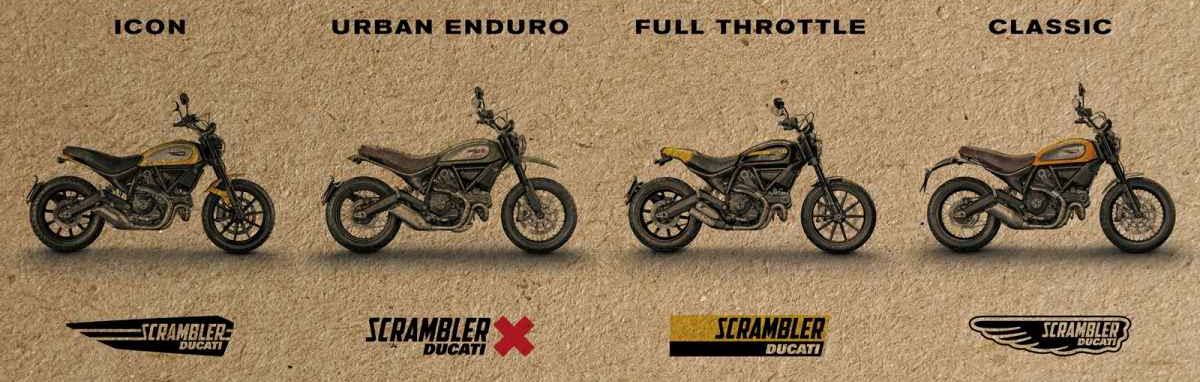
Before the ride I had intended to review it for other people; on the way back I found myself wondering which version I should buy. With only a short distance left, I remembered the serrated rear brake pedal. Standing on the pegs, I headed onto the most off-road-like cobbled road I could find around Ataşehir. Despite my height and weight, I found the position comfortable and could move my weight easily both forwards and backwards. Someone who spends a lot of time standing might prefer thicker, more aggressively toothed footpegs. I did not get to try it, but the Scrambler struck me as capable of enjoyable rides on trails and easy terrain too. There was a version with a Termignoni exhaust; how much was that again? The wire-wheel version is handsome too. Did their website have an online configurator? Oh, are we back already? That was far too quick. :(
I think Korlas will hold the Scrambler launch at GiS Park in early April. I would not miss it. I suspect we will be hearing much more about this handsome fellow. :)
